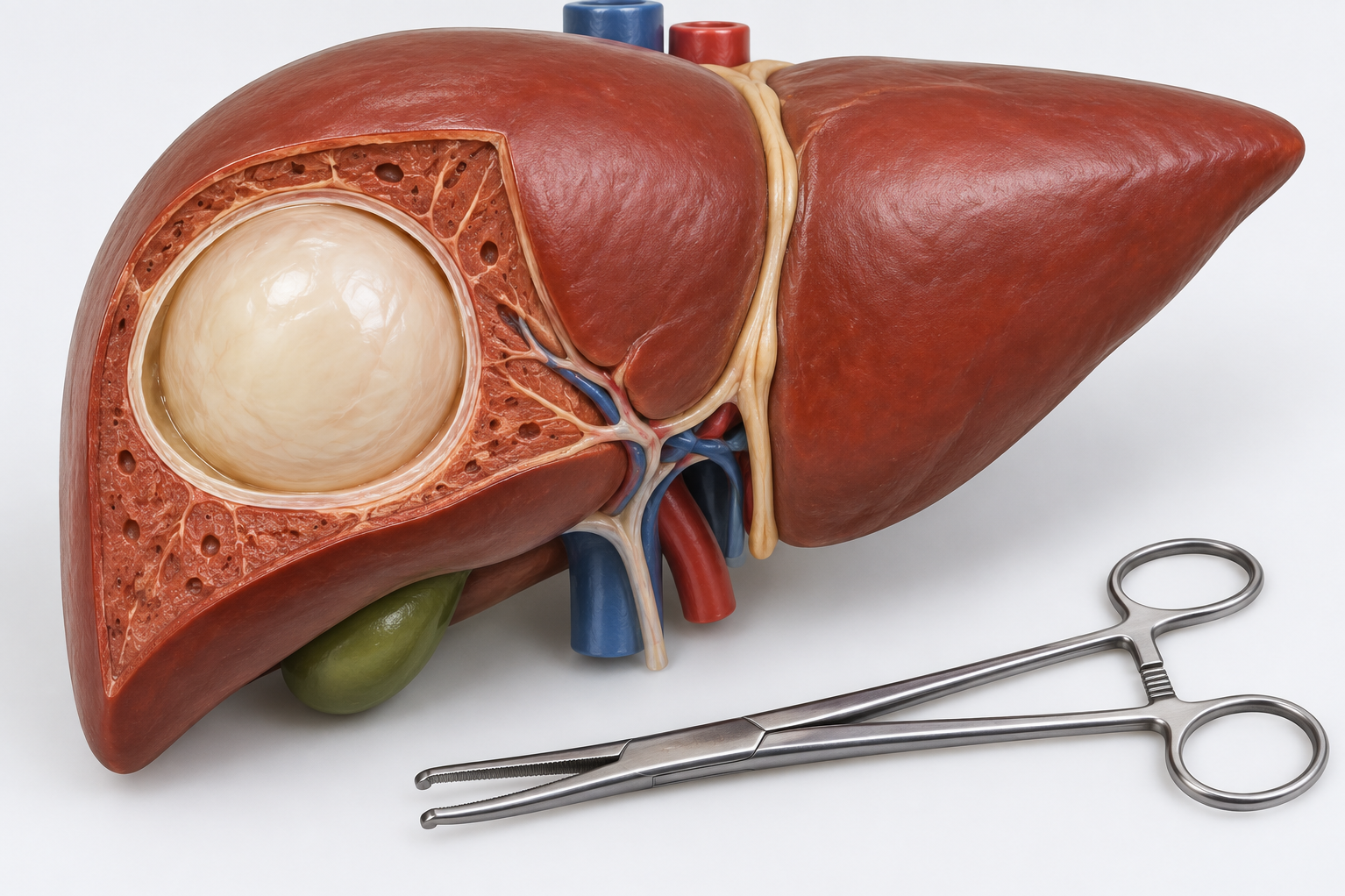
A hydatid cyst is not an ordinary fluid-filled cyst. It is associated with infection by Echinococcus parasites and requires careful clinical assessment because treatment depends on the organ involved, cyst characteristics, symptoms and potential complications.
Patients searching for hydatid cyst excision in Mazgaon may already have received an ultrasound or CT finding and want to know whether surgery is necessary. The answer depends on considerably more than the presence of a cyst.
Where Can Hydatid Cysts Occur?
Hydatid disease can affect different organs, with the liver being a common site. Other organs can also be involved.
Symptoms vary according to location and size. Some cysts are discovered during investigations performed for unrelated reasons, while others cause discomfort or complications.
Imaging plays an important role in characterising the lesion. Additional testing may be required depending on the clinical situation.
Why Is Treatment Planning Different From an Ordinary Cyst?
A hydatid cyst requires specific precautions because its contents can create problems if released into surrounding tissues.
For this reason, patients should not view treatment as simply “draining a cyst.” The location, stage and characteristics of the cyst must be evaluated before deciding how it should be managed.
Treatment options may include medication, selected image-guided approaches, surgery or observation in specific circumstances. The appropriate strategy is determined by the treating team based on the individual case.
When Might Surgery Be Considered?
Surgical management may be considered in selected patients based on features such as cyst size, anatomical position, symptoms, complications or characteristics that make another approach less appropriate.
The surgeon also considers how closely the cyst lies to important blood vessels, bile ducts or neighbouring organs.
For liver hydatid disease, for example, the relationship between the cyst and the biliary system can be an important part of operative planning.
Is Minimally Invasive Surgery Always Possible?
Not necessarily.
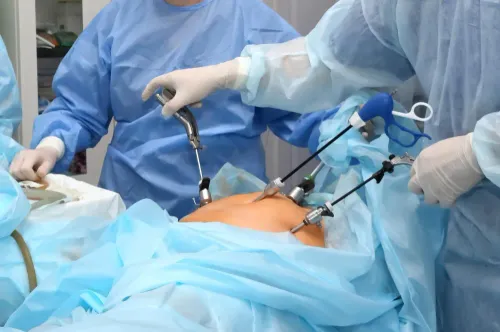
Laparoscopic techniques may be considered in selected cases, while other situations may require an open surgical approach. The safest route depends on anatomy, complexity, cyst characteristics and the surgeon's assessment.
Patients should be cautious about assuming that smaller incisions automatically represent the most appropriate treatment.
A useful surgical consultation should explain why a particular approach has been chosen for that specific cyst.
What Information Should You Bring to the Consultation?
Patients can make their assessment more efficient by bringing available:
- Ultrasound reports
- CT or MRI images and reports
- Relevant blood-test results
- Previous treatment records
- Details of medicines already taken
- Information about previous abdominal procedures
The surgeon may request additional investigations after reviewing these records.
Treatment Does Not Necessarily End With Surgery
Management may include antiparasitic medication around the time of intervention where clinically indicated. The specific drug, duration and timing must be determined by the treating medical team.
Follow-up imaging may also be recommended to assess recovery and monitor for recurrence or disease elsewhere, depending on the original diagnosis.
For patients in Mazgaon and surrounding South Mumbai, Maharashtra, continuity between diagnosis, surgery and follow-up is particularly valuable in a condition requiring structured management.
Dr Amol Wagh evaluates gastrointestinal and abdominal surgical conditions, including cases where minimally invasive surgery may be appropriate. For a suspected or confirmed hydatid cyst, the priority during consultation is to review the imaging carefully, identify the safest treatment strategy and explain what follow-up will be required.
A hydatid cyst should therefore be treated according to its biology and anatomical location not approached as a routine cyst removal.