Discovering a breast lump can cause understandable concern, even when initial evaluation suggests a benign condition such as fibroadenoma. Fibroadenomas are common benign breast lumps, but not every fibroadenoma requires surgical removal.
For patients researching fibroadenoma excision in Charni Road, the first question should usually be whether excision is actually necessary.
What Is a Fibroadenoma?
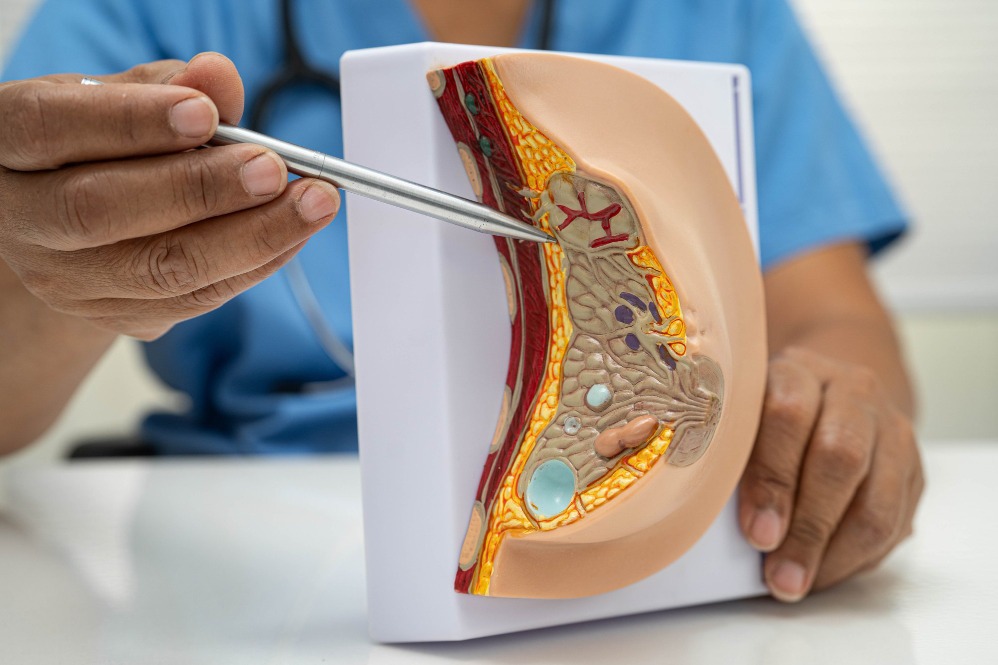
A fibroadenoma is a benign breast lesion composed of glandular and fibrous tissue. It commonly occurs in younger women, although it can be identified at different ages.
A breast lump should not be labelled a fibroadenoma based on touch alone.
Clinical examination and imaging are used to assess the lesion. Depending on age, imaging findings and clinical circumstances, ultrasound, mammography or tissue sampling may be recommended.
The purpose of this assessment is to establish whether the findings are consistent with a benign fibroadenoma or require further investigation.
Does Every Fibroadenoma Need Surgery?
No.
Some fibroadenomas can be monitored when clinical and imaging findings are reassuring. Surgery may be discussed when the lump is enlarging, symptomatic, unusually large, causing significant physical concern, has uncertain findings, or when removal is recommended after clinical evaluation.
Patient preference may also form part of the discussion, but the decision should be informed by appropriate assessment.
What Should Happen Before Excision?
Before deciding on surgery, the diagnosis should be as clear as reasonably possible.
The evaluation may involve what is often described as a combination of clinical assessment, breast imaging and tissue diagnosis when indicated.
Patients should ask:
- Are the imaging findings typical of fibroadenoma?
- Has the lump changed in size?
- Is biopsy necessary?
- Is observation a reasonable option?
- Why is excision being recommended?
- Will the removed tissue undergo histopathological examination?
These questions help ensure that surgery is performed for a clear clinical reason.
What Does Excision Involve?
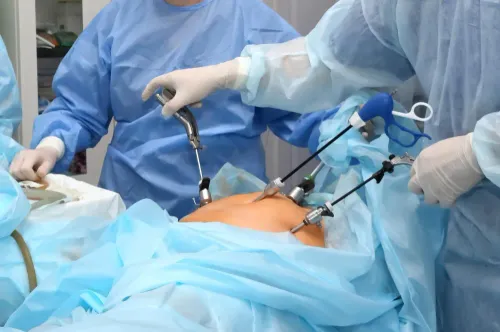
Fibroadenoma excision involves surgically removing the breast lump. The incision and operative approach depend on the size and location of the lesion as well as other anatomical considerations.
Because the breast has both functional and cosmetic importance, surgical planning should consider the position of the incision and the amount of surrounding tissue affected while prioritising appropriate treatment.
Patients should discuss realistic expectations regarding scarring before surgery. Every incision heals differently, and scar appearance can vary between individuals.
What Happens After Removal?
The excised tissue is generally sent for histopathological examination. This allows the tissue to be assessed microscopically and helps confirm the diagnosis.
Postoperative instructions may address:
- Wound care
- Pain management
- Support garments where advised
- Activity restrictions
- Follow-up
- Histopathology results
Patients should also understand which symptoms after surgery require earlier review.
Choosing Evaluation Rather Than Assuming the Diagnosis
For patients in Charni Road and other parts of South Mumbai, Maharashtra, convenient access to surgical evaluation can make follow-up easier, particularly when imaging, biopsy reports and postoperative pathology need to be reviewed together.
Dr Amol Wagh provides general and minimally invasive surgical evaluation for a range of conditions. In patients presenting with a breast lump, the important first step is to establish the diagnosis and determine whether surgery is actually indicated.
The presence of a lump does not automatically make excision necessary. Equally, assuming that every mobile or painless lump is harmless can delay appropriate assessment. A structured breast evaluation provides the information needed to choose between observation, further investigation and surgical removal.